
Cricket's Ongoing Battle Against Corruption
In a stark reminder of cricket's ongoing battle against corruption, recent allegations of spot-fixing, organized crime, and threats have surfaced during this year's T20 World Cup. Lawrence Booth, writing for the Daily Mail, emphasizes that cricket must remain vigilant in the face of these serious claims, which echo past scandals that have marred the sport's reputation.
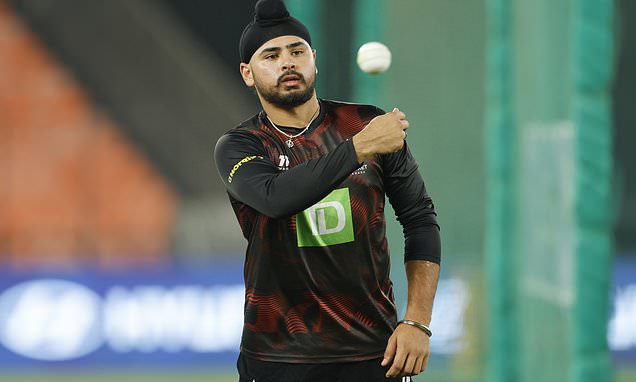
The controversy centers around Canada's captain, Dilpreet Bajwa, who is reportedly under investigation for his performance during a match against New Zealand. In the fifth over of the game, Bajwa's bowling resulted in 15 runs, a performance that has drawn scrutiny from a new documentary titled "Corruption, Crime and Cricket" produced by Canadian investigative journalists. The International Cricket Council (ICC) has acknowledged the allegations but has refrained from commenting on specific cases, leaving many questions unanswered.
The documentary also features claims from former Canadian team coach Khurram Chohan, who alleges he was pressured to select certain players, raising further concerns about the integrity of the team and the sport as a whole. The Indian media has been rife with speculation regarding Canada's cricketing connections to dubious figures in the subcontinent, where betting on sports other than horse racing is illegal.
India's illegal gambling market is estimated to be worth over $100 billion, with cricket accounting for a staggering 80-90% of that figure. This vast and largely unregulated market poses a significant threat to the integrity of the game, as it creates opportunities for corruption that are difficult to monitor.
Despite Canada's relatively obscure status in the cricketing world, the fact that these allegations arise during a World Cup serves as a stark reminder that cricket has not fully eradicated the whispers of match-fixing that have plagued it for years. The rise of franchise cricket, particularly in T20 formats, has further complicated the landscape, as players seek financial opportunities in various leagues, some of which may not be as well-regulated as others.
Historically, high-profile match-fixing scandals have involved prominent players, including South Africa's Hansie Cronje and India's Mohammad Azharuddin. While some of these players have faced severe penalties, the lingering effects of these scandals continue to haunt the sport. The ICC's anti-corruption unit has made strides in addressing these issues, but recent charges have predominantly involved lesser-known players and lower-tier matches, indicating that the problem persists at various levels of the game.
As cricket continues to expand globally, particularly with the increasing popularity of T20 leagues, the challenge of maintaining integrity becomes ever more complex. With so much money involved and numerous players and operatives seeking profit, the ICC and cricketing authorities must remain vigilant to protect the sport's reputation and ensure that the game is played fairly.
Fonte: dailymail.com.