Netcompany Ineos Deploys Pre-Cooling Strategy at Tour de France
Newsroom
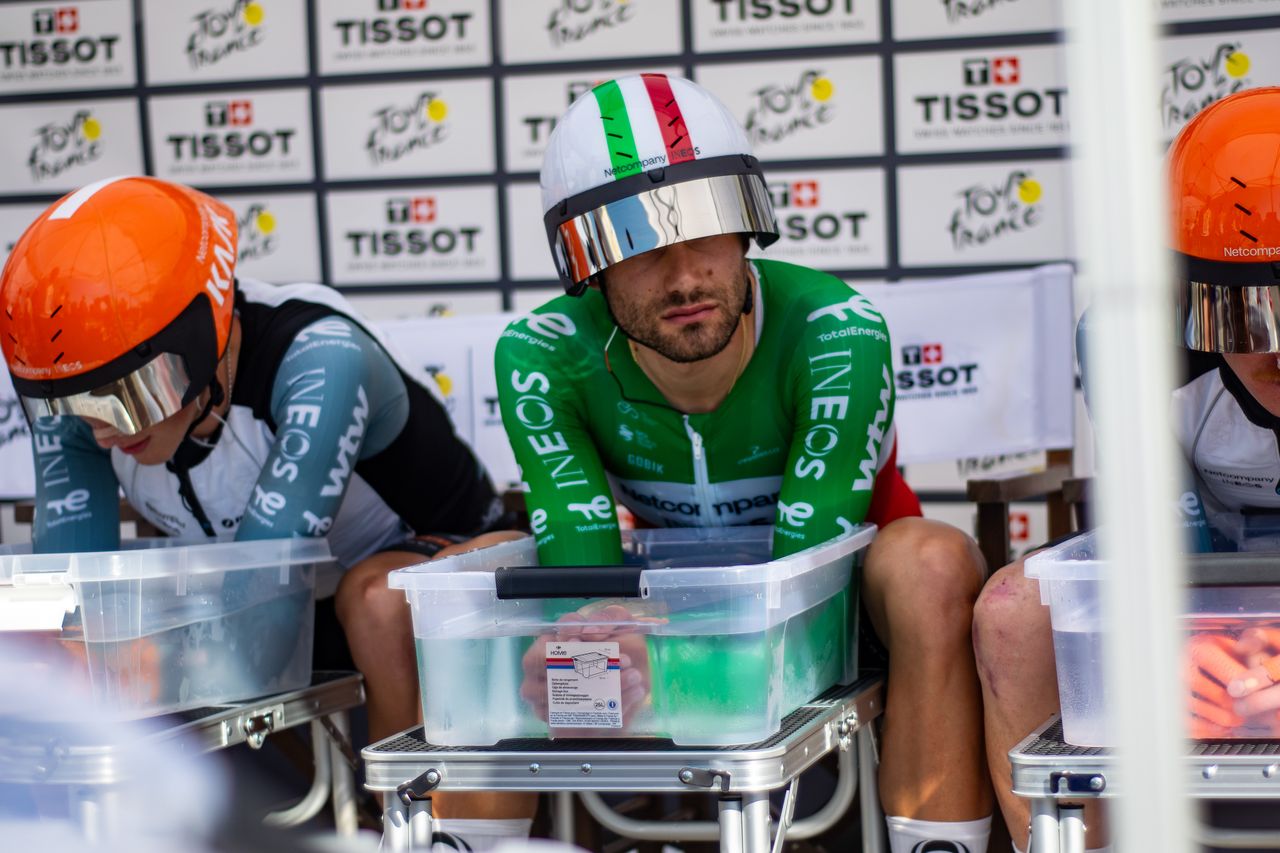
Netcompany Ineos recently rolled out an unusual pre-cooling strategy at the Tour de France team time trial, capturing the attention of onlookers and competitors alike. On July 4, 2026, the team arrived at the warm-up area behind the start ramp with a trolley full of equipment, including eight folding tables and giant plastic tubs filled with water specifically cooled to 8.8 degrees Celsius.
The strategy aimed to simultaneously warm up the riders' muscles while preventing their core temperatures from overheating in the scorching heat of Barcelona. Various other teams utilized common cooling methods, such as ice socks, vests, and misting fans, but Ineos's approach stood out.
As they began unfolding their setup, a crowd gathered, curious about their unconventional technique. Riders took a seat, submerged their arms in the chilled water, but surprisingly remained quiet, with little interaction among themselves or the media. Dorian Godon was the only one to splash water on his face occasionally.
Cyclingnews attempted to inquire about the method's reasoning, but the two crew members responsible for the setup declined to offer any details, simply stating, "you'll see." Observers could infer the method's goal was arm cooling to shed heat without affecting the warming of their legs, particularly since the Union Cycliste Internationale (UCI) banned ice socks during the competition.
Other teams adopted varied strategies. Cofidis appeared unprepared, with riders lacking ice vests and opting for double-layered skinsuits while exposing themselves to direct sunlight. In contrast, Lidl-Trek showed impressive foresight, utilizing road bikes and securing shade near a mountain of ice provided for cooling water bottles. They even arrived with large umbrellas to provide additional shade for their riders.
Meanwhile, both Red Bull-Bora-Hansgrohe and UAE Team Emirates-XRG had ice vests but chose to warm up under the sun instead of finding refuge in the shade, with Red Bull offsetting this with umbrellas. Ultimately, Ineos managed a commendable second place, thanks to Filippo Ganna's performance.
As the day unfolded, it became clear that the unordinary methods employed by Ineos marked a distinctive approach to handling the extreme conditions of the race, highlighting their commitment to detail and optimization in competitive cycling.
Source : cyclingnews.com.