Analysis of Mercedes' Floor Post Russell's Belgian GP DNF
Newsroom
Analysis of Mercedes' Floor Post Russell's Belgian GP DNF
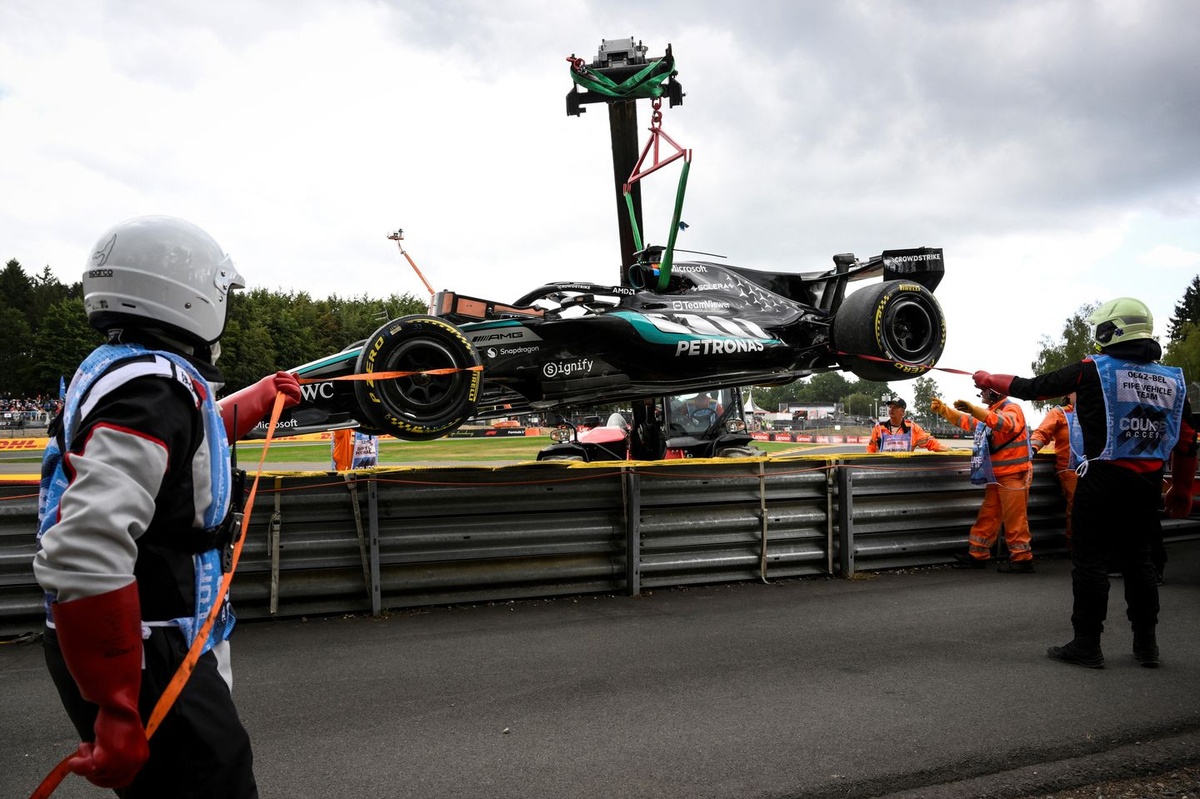
Mercedes' championship-leading Formula 1 car had its secrets exposed when George Russell's car was craned out of the gravel at Spa-Francorchamps. The last thing that an F1 aerodynamicist wants is to see their car dangling precariously from a crane, beyond the implication of their driver being unable to continue in the race.
F1 teams typically like to keep their floor designs under wraps, as this part of the car generates the most downforce. Much of the detail surrounding the floor remains hidden when the car is on-track or in the garage, but if a crane is needed to lift a car to safety, that underbelly is likely to be revealed.
For example, Sergio Perez's qualifying crash at Monaco in 2023 provided other teams with insights into the inner workings of Red Bull's RB19. Although the photographs could not divulge every specific detail, they allowed teams to run simulations based on similar designs.
In contrast, the visibility of George Russell’s Mercedes floor at the 2026 Belgian GP provides insight into how upper-tier teams construct their cars this year. The analysis begins with the back end of the Mercedes floor. The floor features a diffuser that expands airflow and creates a low-pressure area behind the car, which helps generate downforce. The diffuser kick line marks where the floor must transition from being flat.
Additionally, a plank, or skid block made of resin, is employed to ensure that cars do not run too low. If this component wears down by more than 1mm during a race, it can disqualify the driver. Features such as the outer floor edge and outer diffuser components play significant roles in managing downforce and airflow.
Another component of note is the diffuser strake, which conditions airflow underneath the car. The setup aims to create a system that can retain low pressure while managing flow effectively, minimizing turbulence generated by the tires during rotation. The design adjustments made for the Canadian Grand Prix illustrated Mercedes' response to challenges like "tyre squirt," where turbulent flow risks interfering with diffuser performance.
The interplay between these components is critical. High and consistent levels of rear-end downforce are essential for stability, further enabling drivers to confidently transfer power to the road. Without effective diffuser design, achieving this balance becomes challenging, leading to diminished performance and decreased driver confidence.
Source: autosport.com.