The Role of MotoGP Riders in Bike Development
Newsroom
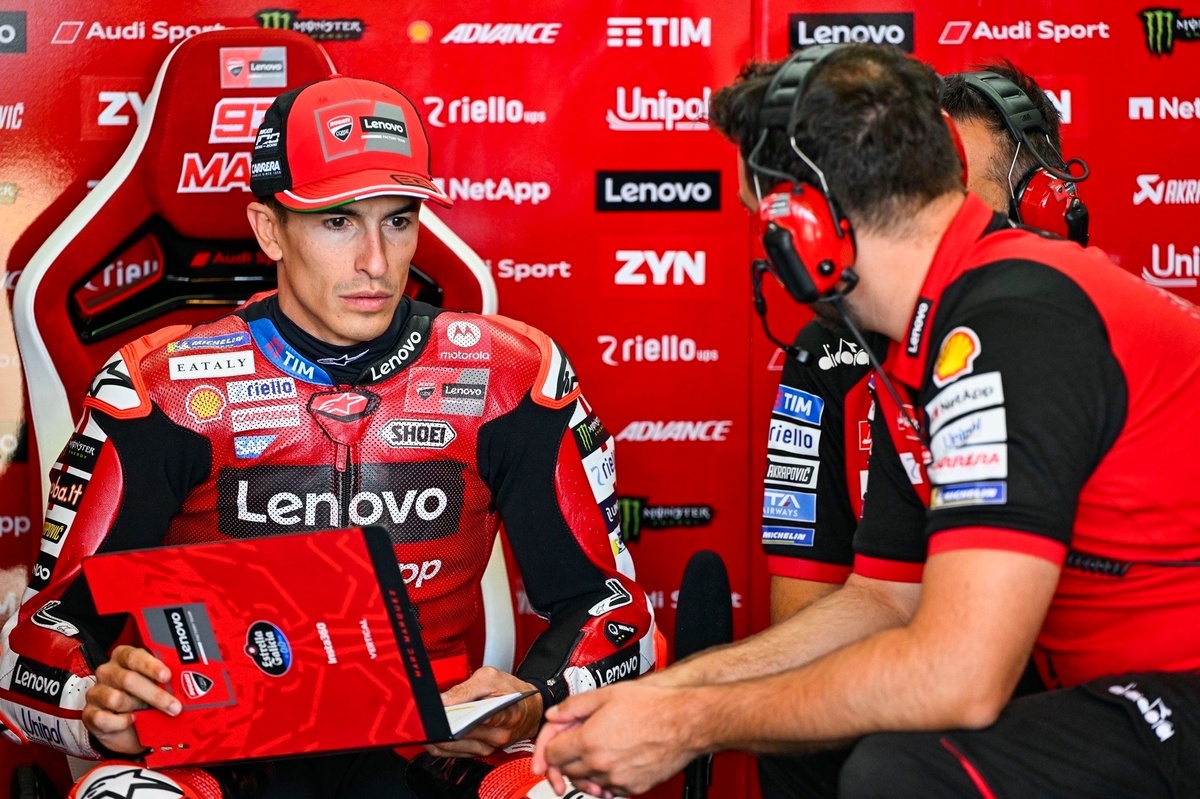
The Role of MotoGP Riders in Bike Development
It was common to see fans crediting a manufacturer's progress or struggles to the quality of its riders. Some riders were considered exceptional development riders, while others were accused of leading engineers in the wrong direction. However, how much influence does a MotoGP rider actually have over the technical evolution of a bike?
Joan Mir experienced both ends of the spectrum, winning the 2020 world championship with Suzuki before becoming a factory Honda rider and testing countless upgrades over the years. In his view, a rider's job is to provide accurate feedback, while leaving the engineering solutions to those responsible for designing the bike.
"Normally, every rider wants to go faster," Mir explained in an interview with Autosport. "We can explain what we feel on the bike, but we're not engineers. Maybe some riders think they are engineers, but we're not! We're riders, and our job is to explain our sensations as clearly as possible, not to provide solutions. Finding a way to make the bike faster isn't in our hands."
It was the engineers, not riders, who developed MotoGP bikes. Now team manager at Tech3, Nicolas Goyon previously spent years analyzing data and working as a crew chief, giving him a front-row seat to the process of evaluating new parts. He agreed that while riders play a crucial role, the ideas themselves come from the engineers.
"The engineers create the upgrades and develop the bike," Goyon told Autosport. "The rider's role is fundamental because, in the end, he's the one who chooses which parts to use and which package to race with. But it's the creativity of the engineers and the factory teams that determines whether a bike becomes competitive or not."
Riders influenced development by describing how the bike behaved after each session, noting what characteristics they wanted improved. However, it was rare for them to prescribe a specific technical solution. "We can say, 'I want the bike to rotate more on the rear, I want better front-end feeling,'" Mir explained. "But we can't say, 'I want a shorter swingarm' or 'I want a different chassis'. That's the team's job."
Goyon highlighted Valentino Rossi's move from Honda to Yamaha to illustrate this point. In Goyon's view, Rossi's greatest contribution was his riding talent instead of transforming the M1 through development.
"For me, you can't go from having a terrible bike in 2003 that wins nothing to a championship-winning bike in 2004 simply because of one rider," he stated. "Of course, Valentino Rossi brought his speed, his setup knowledge, and his riding style. However, the engineers already had the solutions. Valentino Rossi didn't develop the M1 into a winning bike by himself."
Rider feedback became particularly pivotal ahead of MotoGP's sweeping 2027 technical regulations, with manufacturers designing entirely new motorcycles featuring smaller engines, reduced aerodynamics, and new tyres. Marco De Luca, Aprilia's head of vehicle dynamics, emphasized that rider feedback is invaluable alongside simulation tools.
"When you have a very good rider, especially one who has never ridden with the new tyres before, he needs to be extremely clear about what he feels, what he wants, and what he likes," De Luca explained. "The rider's impressions are very important."
In conclusion, the development process is a joint effort where engineers create, and riders help refine based on their experiences on the bike. Despite advancements in technology, the unique perspective of a rider remains essential for the ultimate feedback on a motorcycle's performance.
Fuente: autosport.com.