Study Links Political Ideology with Preference for Messi or Ronaldo
Newsroom
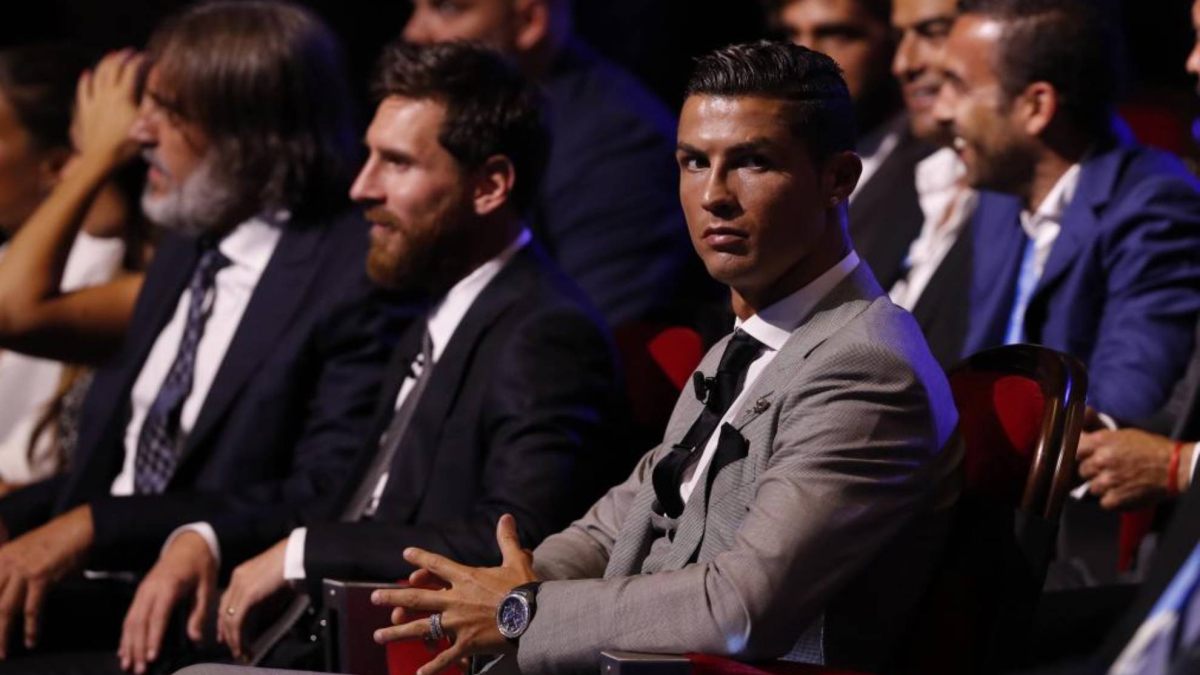
A recent international scientific research involving Carlos III University of Madrid (UC3M) revealed that the football rivalry between Leo Messi and Cristiano Ronaldo transcends the strictly sports realm and connects with the political ideology of the fans. The study, conducted by researchers from UC3M, the National University of Singapore (NUS), and Nanyang Technological University (NTU), found that "in general, progressive profiles prefer Messi, while conservatives lean towards Ronaldo." In fact, political ideology was stated as "the strongest individual predictor" after controlling for demographic factors, media use, personality, and cognition, as explained by one of the authors, Teresa Gil López, a professor in the Social Sciences Department at UC3M and the Juan Linz Institute.
"The most progressive respondents preferred Messi, while the more conservative ones favored Ronaldo. The moderating effect between age and ideology is also noteworthy: the ideological effect is more pronounced among younger respondents and diminishes in older groups," stressed Gil López.
The authors clarified that the study should not be interpreted as deterministic or as a verdict on the personal tastes of the fans. Instead, they stated that "the finding suggests that beneath personal choices lie currents and values that influence social and political life." "This study is not a verdict on anyone's taste and does not assert that politics determines a person's football preference mechanically and inevitably," noted Saifuddin Ahmed from NTU.
What it suggests is that "the line between our political identity and cultural life has become much thinner than most of us perceive, and the Messi-Ronaldo rivalry, which almost everyone experiences as something purely personal, actually reflects narratives that speak of broader underlying values,” Ahmed emphasized.
He added, "Most people who favor one of these two players perceive it as personal, rooted in specific memories, matches watched, and playing styles that excited them, which is considered 'real.' But beneath that personal layer, our data suggest another layer connected with values and dispositions that also organize our political life. The finding doesn’t invalidate the personal layer; it simply shows that it is not the only one," concluded Ahmed.
This work, published in the Social Science Research Network (SSRN), was conducted through a transnational online survey between April and May 2026, with a sample of 10,661 participants selected based on quota sampling in 26 countries. To choose the nations, priority was given to diversity in football culture, economic development, and political systems, while the internal samples of each country were balanced by age and gender to approximate the actual distribution of their adult population. The data collection also included additional measures to gather political ideology, demographic variables, media consumption habits, and a set of validated items and scales of personality and cognition.
Fuente: marca.com.