Statistics from the 2026 FIFA World Cup
Newsroom
The 2026 FIFA World Cup is marked by Spain's second title, the expansion to 48 teams, and controversies surrounding Argentina. However, this tournament also left behind a collection of statistics that often went unnoticed. Records for goals, individual performances, betting trends, and sweltering temperatures tell another story of this edition.
Published on: 24/07/2026 - 18:11
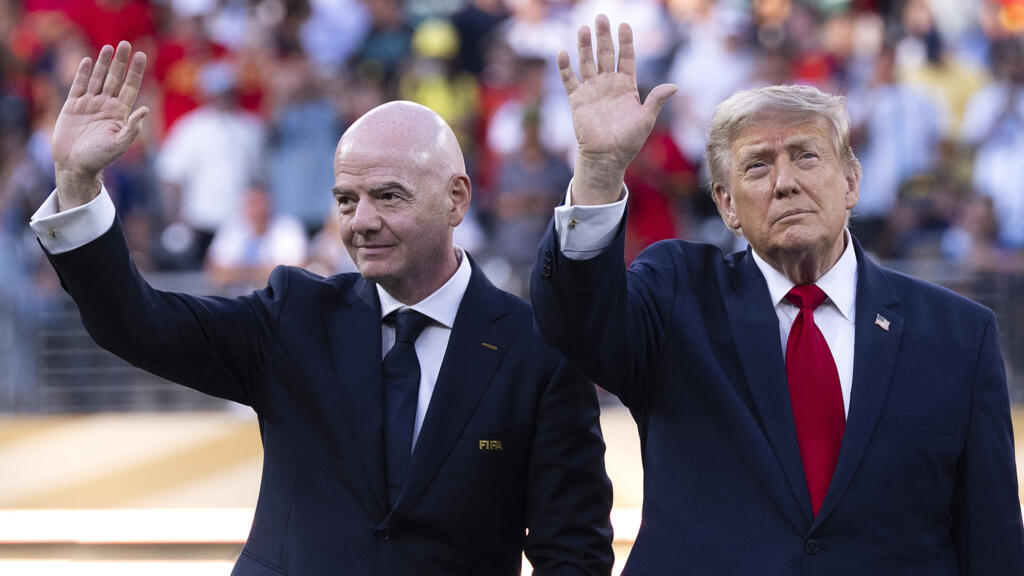
The FIFA President, Gianni Infantino, attended 24 of the 72 group stage matches, while the American President, Donald Trump, attended only the final match. Gianni Infantino previously promised that the World Cup would be larger and aimed to become "the most successful sporting event in history." With 48 teams, 104 matches, and three host countries, this edition was indeed exceptional. Statistics seem to validate this claim to some extent, as the nets in the United States, Canada, and Mexico shook 308 times, averaging nearly three goals per match (2.96 precisely). Only seven matches ended in a 0-0 draw. Zero was also the number of goals scored by Panama, the only team not to score from their first to their last match. Spain built their second title on an almost impenetrable defense, conceding just one goal in eight matches.
The expansion to 48 teams was intended to give more opportunities to nations less familiar with major tournaments. Some took advantage of this, as Paraguay created a sensation by eliminating four-time champion Germany after a 15-year absence from the World Cup, briefly challenging the French team in the knockout stage. Orlando Gill, the Paraguayan goalkeeper, finished the tournament with 28 saves in six matches, averaging nearly five saves per match. The ten African teams saw nine reach the Round of 16, while Morocco advanced to the quarter-finals.
Conversely, some major nations left with less flattering statistics. The unfortunate finalist, Argentina, led by Lionel Messi, failed to register a single shot on target during the final's regulation time—an unfathomable statistic for a team that seemed set for another title just days earlier.
In terms of distance, Kylian Mbappé reached a speed of 37.6 km/h during the tournament, with a mere 0.6 km/h separating him from second-fastest player Anthony Elanga. Spanish player Rodri covered nearly 84 kilometers over seven matches, equivalent to two marathons. One minimum game played record was held by Spain’s Iglesias and Ghana’s Rahman at a single minute of play. In contrast, Emiliano Martinez, the Argentinian goalkeeper, did not miss a minute, playing all 934 minutes leading up to the final without substitution.
Players were also faced with extreme heat during the tournament, with temperatures reaching 38 °C during the Round of 16 match between France and Paraguay, held at Philadelphia Stadium, one of the few un-air-conditioned venues. The Scientists for Global Responsibility group had predicted this World Cup would be the most polluting in history, given FIFA's lack of engagement on climate change. Throughout the group stage, Gianni Infantino averaged two matches per day, sometimes traveling nearly 5,000 kilometers in a single day via private jet.
Contrastingly, Donald Trump only attended the final at MetLife Stadium in New York. This World Cup also saw a surge in sports betting in France, reportedly totaling 1.3 billion euros, more than double that of the 2022 event, due in part to multiple cooling breaks. Approximately 15,000 bettors placed over 500 bets each, with the semi-final France-Spain on July 14 drawing a record 63 million euros in online wagers—making it the most bet-upon match since 2010.
Source: rfi.fr.